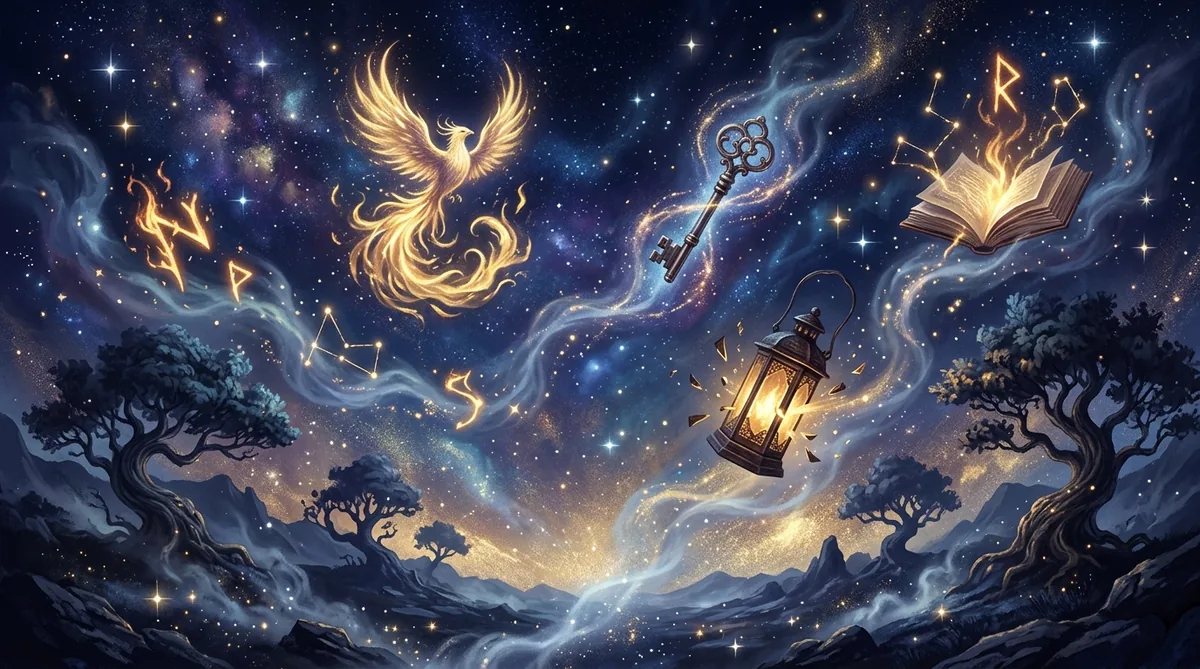

There are dreams that vanish with daylight, and there are dreams that linger like smoke in the curtains of the mind. A dream of fire belongs to the second kind. It unsettles because it does not merely show an image; it exposes a force. Flame in the inner world often arrives when something in the outer life can no longer remain contained—anger, desire, grief, ambition, envy, longing, or the exhausted remains of an old identity.
What makes such a dream more piercing is silence afterward. When a person sees fire in sleep and says nothing, the unspoken image tends to deepen its roots. The psyche keeps circling what the mouth avoids. In that sense, the dream is not only about destruction. It is about the pressure of untended feeling, the fear of what may burn away, and the secret hope that what survives the blaze may finally be true.
The Psychological Layer
Psychologically, fire dreams often emerge when emotion has crossed the threshold from manageable to urgent. Passion and rage share a common heat. So do creativity and resentment. A person may dream of a house fire, a candle, a wildfire, or a controlled flame, yet beneath the changing forms lies the same question: what energy in me has become too strong to ignore? The dream does not always accuse. Sometimes it reveals sheer vitality that has been suppressed for too long.
Such dreams frequently accompany unresolved conflict. The mind may present flame when waking life has become crowded with friction—strained relationships, self-criticism, blocked artistic work, or a private sense of failure. Fire dramatizes what the conscious personality tries to dampen. The dreamer may fear destruction, but just beneath that fear often lies another wound: inadequacy. If I let this force speak, will I lose love, safety, status, or control? Thus the fire becomes an image of both danger and forbidden potency.
There is also a purgative dimension. Not every burning image signifies collapse. Sometimes the dream marks the psyche’s attempt to clear dead material: stale loyalties, expired ambitions, inherited shame, or fantasies that once protected the self but now smother it. In that sense, the inner blaze appears where doubt has piled up like brushwood. The dream says that something is overripe, overcrowded, or no longer breathable. The fear of losing what is familiar contends with the deeper need to be changed.
The Biblical Layer
In biblical symbolism, fire is rarely one thing. It can judge, reveal, purify, guide, or consecrate. Moses meets the mystery of God in a bush that burns without being consumed, a sign that divine fire is not mere destruction but presence—Exodus 3:2. Israel is led through the wilderness by a pillar of fire by night—Exodus 13:21. At Carmel, Elijah calls down fire that exposes what is true and what is false—1 Kings 18:38. Scripture therefore teaches that flame may signify the crisis through which hidden reality is made visible.
The Bible also joins fire to purification. “He is like a refiner’s fire” in Malachi 3:2, an image not of random ruin but of severe cleansing. Paul writes that each person’s work will be tested by fire—1 Corinthians 3:13. Peter speaks of faith refined like gold—1 Peter 1:7. When a dream of fire comes, it may mirror this ancient pattern: what has been built in the soul is being weighed. The question is not simply what will burn, but what in you can endure the burning.
Yet scripture never romanticizes flame. There is strange fire that profanes—Leviticus 10:1-2. There is the tongue set ablaze by hell in the destructive power of speech—James 3:6. There is judgment upon what has become corrupt and hardhearted—Isaiah 66:15-16. So the biblical witness holds tension. Fire can be holy visitation or the consequence of disorder. In dream language, this means one must ask whether the blaze reveals divine purification, human anger, moral conflict, or the collapse of what was never soundly founded.
The Cosmic Layer
Dreams of fire often cluster around recognizable thresholds in waking life. They appear during breakups, career transitions, relocations, creative blocks, family estrangements, and seasons of exhaustion when the old structure of life can no longer contain the pressure within. The timing is usually concrete rather than mystical. A person nears a deadline, reaches midlife, enters parenthood, faces illness, or revisits old wounds after an anniversary, and the psyche answers with flame.
There are recurring life stages when this imagery becomes especially common. In the late twenties and early thirties, dreams of burning may accompany the collapse of youthful certainty. In the forties and fifties, they may arise when the personality built for achievement begins to conflict with neglected inner life. After grief, betrayal, or prolonged caregiving, fire imagery can appear as the mind’s stark way of portraying overload. In each case, the symbol gathers force when external roles no longer match internal truth.
Seasonal circumstances matter as well. Fire dreams often intensify during periods of sleep disruption, emotional suppression, overwork, or after conflict that never reached honest speech. They may recur when a person keeps postponing an inevitable ending. Thus the timing of the dream is itself part of the interpretation. The image arrives not in abstraction but in the exact hour when something unsustainable has reached its limit and demands acknowledgment.
I, Joseph, tell you that fire in a dream is not sent lightly. I have watched the soul hide its embers beneath obedience, politeness, and fatigue, only to tremble when the night uncovers what the day concealed. If you saw flame, ask not first, “What will be taken from me?” Ask rather, “What in me has long begged to live?” For the same fire that threatens the false can warm the true. I have learned that fear often guards the doorway of transformation.
I say also that silence after such a dream has its own meaning. When you do not speak of the fire, the image descends deeper into the inward chambers. There it waits, not as an enemy, but as a witness. I would have you know this: not every burning is judgment, and not every loss is ruin. Some things must end because they have already ceased to give life. If the dream disturbed you, it may be because your spirit recognized before your mind did that a season is closing.
Practical Guidance
Begin tomorrow morning with a single page of unedited writing about the dream. Record every detail you remember—the size of the fire, its color, what was burning, who was present, whether you felt panic, awe, helplessness, or relief. Then write three things in waking life you know must end. Name them plainly. The power of the exercise lies in specificity, because vague renunciations rarely touch the root.
Next, perform one visible act of release. Delete a thread that keeps you bound to an old wound, box up objects tied to a dead chapter, cancel a commitment that is draining what should be given elsewhere, or finish a conversation you have delayed. Fire in dreams often points toward psychic congestion. A concrete act in daylight gives form to the inner movement and prevents the symbol from remaining only emotional theater.
Finally, create a brief evening practice for seven nights. Sit in silence for a few minutes before sleep and ask what in you seeks purification rather than punishment. Keep a glass of water nearby as a tactile reminder of balance: heat and cooling, intensity and containment. If the dream returns, compare the details from night to night. Repetition usually reveals whether the image is moving toward destruction, clarification, grief, or renewal.
Frequently Asked Questions
What does it mean spiritually when you dream of fire?
Spiritually, a dream of fire often points to intense inner change. It can symbolize purification, judgment, passion, anger, or the exposure of something hidden. The meaning depends on context: whether the fire felt threatening, sacred, controlled, or consuming. In many traditions, flame reveals what cannot remain as it was. Such a dream may signal that an old identity, attachment, or conflict has reached a breaking point within you.
Is dreaming of fire a bad sign or a sign of transformation?
It can be either, and often it is both at once. Fire is a double symbol: it destroys what is fragile, false, or exhausted, yet it also clears space for renewal. A troubling fire dream does not automatically predict disaster. More often, it reflects emotional pressure, unresolved conflict, or necessary change in waking life. The essential question is what the fire was doing—consuming blindly, revealing truth, or refining something that can endure.
Explore Dream Symbols Connected to These Transits
Symbols and emotions from this reading often echo the archetypes catalogued in the dream symbol dictionary, where you can explore related entries and go deeper into what your subconscious is revealing.
✦ This content is for spiritual and entertainment purposes only. Dream and astrological interpretation is a symbolic language, not a predictive science. Always consult qualified professionals for decisions affecting your health, finances, or legal matters.